
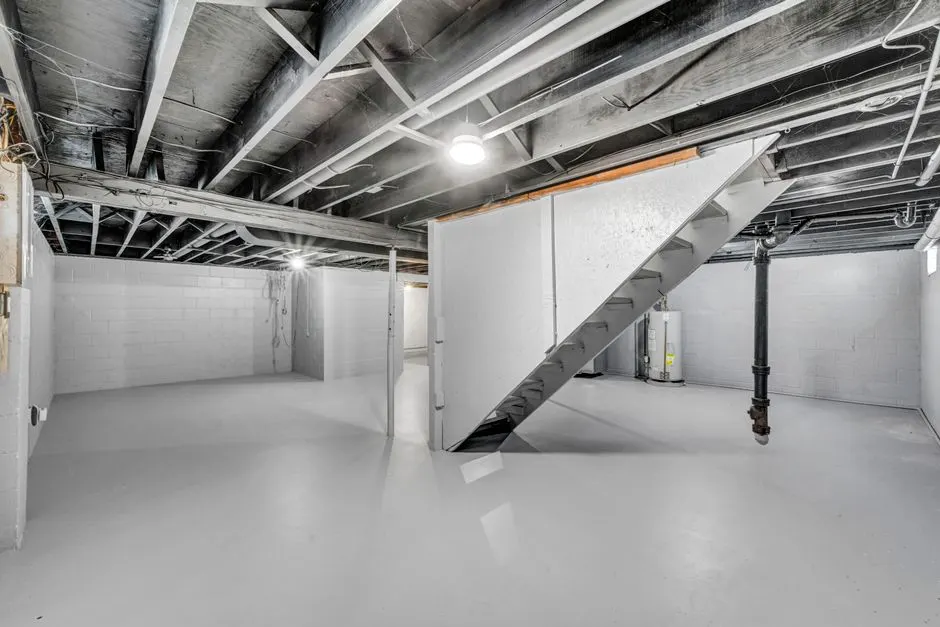
A basement floor drain that keeps backing up in Colorado Springs is almost always a main sewer line problem, not a clog in the floor drain itself. The floor drain is the lowest opening in your basement plumbing, so when the main line restricts, water has nowhere to go but up through that drain. That is why you can plunge the floor drain all afternoon and still watch it fill back up the next time someone runs the washing machine.
Below we break down the actual causes we find on calls across Colorado Springs, how to tell a floor drain clog from a main line blockage, and what it costs to fix in 2026.
Why Does My Basement Floor Drain Keep Backing Up in Colorado Springs?
Basement floor drain backing up Colorado Springs CO is the symptom of a blocked or restricted main sewer line that sits lower than your basement slab. The floor drain connects to the same main line that carries everything from your kitchen sink, toilets, and laundry. When that line narrows from grease, roots, or scale, water backs up to the lowest point in the system - the basement floor drain.
We see this pattern constantly in older neighborhoods. In a 1950s ranch near Old Colorado City drain cleaning customers call us because the floor drain gurgles every time the shower runs. In a newer build out near Powers drain cleaning, the same symptom shows up after a heavy laundry day. Different houses, same root cause: the main line cannot keep up.
The floor drain itself is rarely the problem. It is the messenger.
What Causes Basement Floor Drain Backups in Colorado Springs CO?
Six causes account for nearly every basement floor drain backup Colorado Springs CO we respond to. Here they are, roughly in order of how often we find them.
1. Root intrusion in the main sewer line
Cottonwood, willow, and mature elm roots travel toward the moisture and nutrients inside a sewer line. A hairline crack or a loose joint is all it takes. Once roots get inside, they form a mat that catches paper and grease, and the line narrows month by month. The floor drain is usually the first fixture to complain.
2. Grease and sludge buildup
Kitchen grease cools as it travels and sticks to the pipe wall. Over years it combines with soap scum and food particles into a sludge layer that can reduce a 4-inch line to 1 inch of open flow. If your kitchen sink drain cleaning Colorado Springs CO calls always seem to come right before a basement backup, that is not a coincidence.
3. Scale and mineral deposits
Colorado Springs water runs hard - typically 10 to 15 grains per gallon. That calcium carbonate precipitates out inside cast iron and clay pipe, roughening the walls and giving debris something to grab onto. A 40-year-old line can lose a third of its diameter to scale alone.
4. Collapsed or offset pipe
Cast iron from the 1950s and 1960s rusts from the inside out. Clay tile from earlier decades shifts with soil movement. When a section collapses or a joint offsets, waste catches on the lip and the line backs up every few months no matter how many times it is snaked.
5. Storm and groundwater surcharge
During a Front Range downpour or spring snowmelt, the municipal main can surcharge - meaning it fills past capacity and pushes water backward into the lowest private connection. Your floor drain becomes the relief valve. This is why backups often happen during or right after a storm rather than on a dry Tuesday.
6. Sump pump or laundry discharge overload
If your sump pump or washing machine discharges into the floor drain, you are asking a 2-inch drain to handle flow it was never sized for. The drain backs up, the pump cycles, and the cycle repeats.
Why Colorado Springs Soil and Weather Make It Worse
Colorado Springs sits on expansive clay and decomposed granite that swells when wet and shrinks when dry. That movement flexes buried sewer lines every season. A joint that was tight in July can be offset by the following March.
Add our freeze-thaw cycle - roughly 150 freeze-thaw days a year along the Front Range - and you get soil that heaves and settles around the pipe. That is why we see more root intrusion and joint separation here than in cities with stable, sandy soil.
Spring snowmelt and summer monsoon season both push groundwater into the system at once. If your floor drain backs up in April or August, the calendar is telling you something.
How to Tell the Difference Between a Floor Drain Clog and a Main Line Blockage
Run this simple test before you call anyone. It takes five minutes and saves you from paying for the wrong service.
- Fill the laundry sink or a bathtub and let it drain while you watch the basement floor drain.
- If the floor drain gurgles, bubbles, or rises, the blockage is downstream in the main line.
- If nothing happens and only the floor drain itself is slow, the clog is local to that drain.
- Flush a toilet upstairs. If the floor drain reacts, you have confirmed a main line issue.
Multiple slow fixtures plus a backing-up floor drain equals a main line problem. One slow floor drain and everything else fine equals a local clog. That distinction decides whether you need floor drain snaking Colorado Springs CO or full main line work.
How Do I Stop My Basement Floor Drain From Backing Up in Colorado Springs?
Stopping a recurring basement floor drain backup Colorado Springs Colorado homeowners deal with every year comes down to three things: clear the line, verify the cause, and keep it clear.
Step 1: Clear the blockage correctly
A hand snake or store-bought auger handles a local floor drain clog. It will not touch a root mass 30 feet into the main line. For that you need a professional-grade auger or hydro jetting Colorado Springs CO, which scours the full pipe wall instead of just punching a hole through the blockage.
Step 2: Verify with a camera
Snaking a line without looking inside is guesswork. A sewer camera inspection Colorado Springs CO shows whether you are dealing with roots, a belly in the line, a crack, or just grease. It takes about 20 minutes and tells you whether the fix is a cleaning or a repair.
Step 3: Keep the line clear
Once the line is clean, maintenance matters. We recommend a professional cleaning every 12 to 18 months on homes with mature trees, and every 24 months on newer builds with no tree cover. If you have already had two backups in a year, annual service is the cheaper path.
Common Mistakes Homeowners Make With a Backing-Up Floor Drain
We get called after these mistakes constantly, and most of them make the problem worse or more expensive.
- Pouring chemical drain cleaner down the floor drain. Caustic cleaners sit in standing water, eat at older pipe walls, and do nothing to a root mass. On cast iron they accelerate the corrosion that caused the problem.
- Snaking the floor drain instead of the main line cleanout. You clear 10 feet of the wrong pipe and the backup returns within a week.
- Ignoring the first backup. One backup is a warning. Two in six months means the line is restricted and will fail again - usually at the worst possible time.
- Running the washing machine during a storm. If the municipal main is surcharging, you are adding volume to a system that is already pushing back.
- Assuming the floor drain is the problem. It almost never is. Treat the symptom and you will be back in the same spot next season.
When to Call a Professional
Call us when the floor drain backs up more than once in a six-month window, when multiple fixtures drain slowly at the same time, or when you smell sewer gas in the basement. Those three signals point to a main line problem that will not resolve on its own.
At Drain Plumber Pros, we run a camera down the line before we quote anything, so you know exactly what is blocking it and what it takes to clear it. If it is a simple clog, we snake it. If it is roots or a collapsed section, we tell you that up front and walk you through the options.
Typical 2026 pricing in the Colorado Springs area runs $175 to $350 for a standard main line cleaning, $350 to $600 for hydro jetting, and $150 to $300 for a camera inspection. Emergency calls after hours run higher.
Frequently Asked Questions
Why does my basement floor drain keep backing up in Colorado Springs?
Because the main sewer line is restricted, not the floor drain. Roots, grease, scale, or a collapsed section narrow the line, and water backs up to the lowest opening in the basement. Snaking the floor drain alone will not fix it - the main line needs to be cleared and inspected.
What causes basement floor drain backups in Colorado Springs CO?
The top causes are tree root intrusion, grease and sludge buildup, mineral scale from hard water, collapsed or offset pipe in older cast iron and clay lines, and municipal main surcharge during heavy rain or snowmelt. Most backups trace back to one of these five.
How do I stop my basement floor drain from backing up in Colorado Springs?
Clear the main line with professional snaking or hydro jetting, verify the cause with a camera inspection, then schedule maintenance every 12 to 18 months if you have mature trees. If you have had two backups in a year, annual cleaning is the reliable fix.
Who does floor drain cleaning near me in Colorado Springs?
Drain Plumber Pros handles floor drain cleaning and main line work across Colorado Springs, including Widefield, Fountain, Falcon, and Manitou Springs. We camera the line first, quote the fix, and clear it the same visit in most cases.
Can I just pour drain cleaner down the floor drain?
No. Chemical cleaners sit in standing water, damage older cast iron and clay pipe, and cannot penetrate a root mass or a grease plug in the main line. They make the eventual professional repair more expensive, not less.
Get Help With Drain Cleaning in Colorado Springs
If your basement floor drain keeps backing up, we can camera the line, find the actual cause, and clear it - usually the same day. Call Drain Plumber Pros at +1 719-455-0231 and we will get your basement dry and your main line flowing again.